Summary
Train Your Brain V2 is a remake of the original Train Your Brain. Its four mini-games Cube Count, Memory Challenge, Box Drop and Speed Math help players practise staying calm, patient and focused. Players see their neurofeedback in real time and learn to control it while they play. The exercises adapt to the player’s performance, so players learn to self-regulate their mental state and sharpen specific cognitive skills.
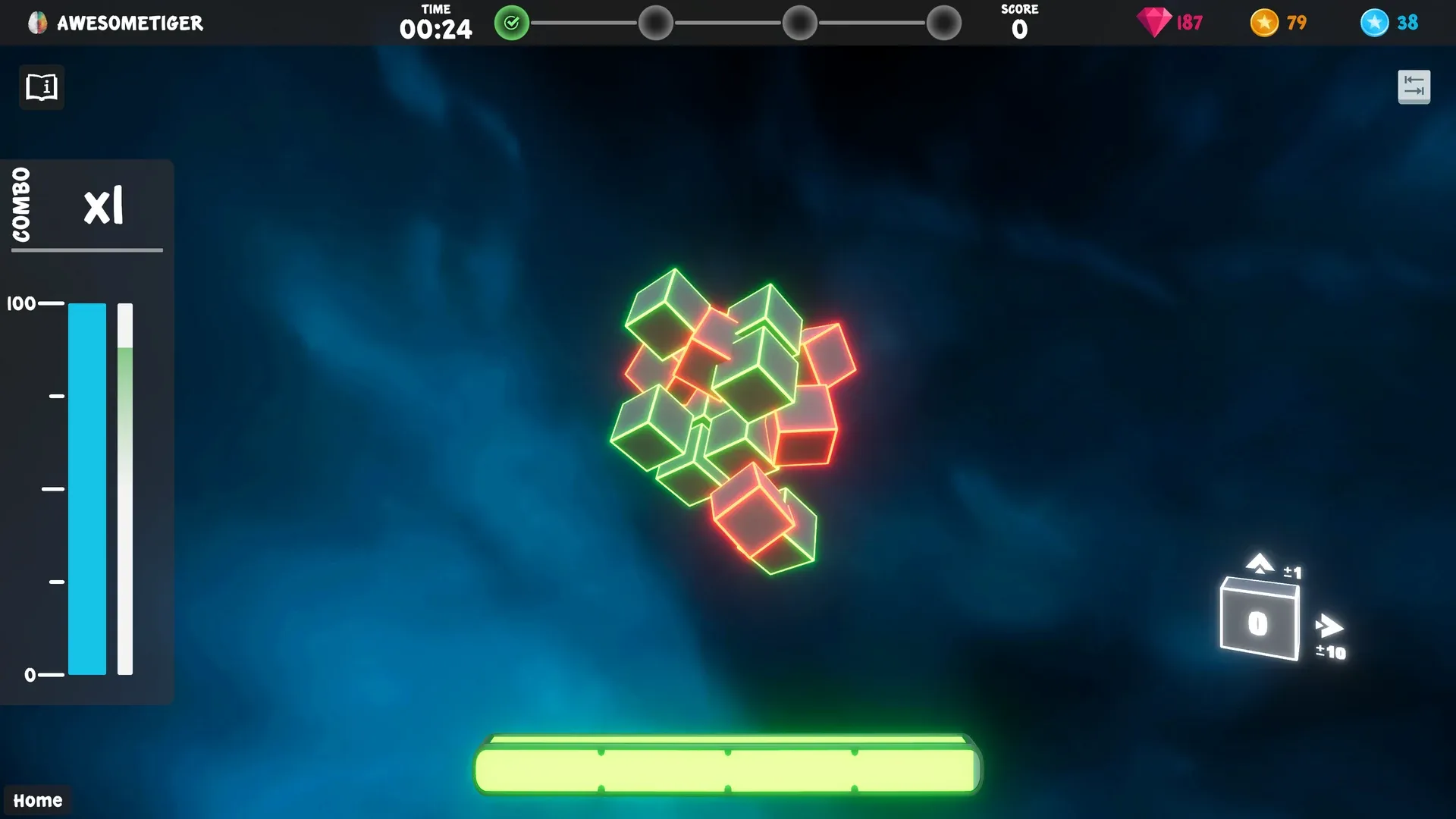
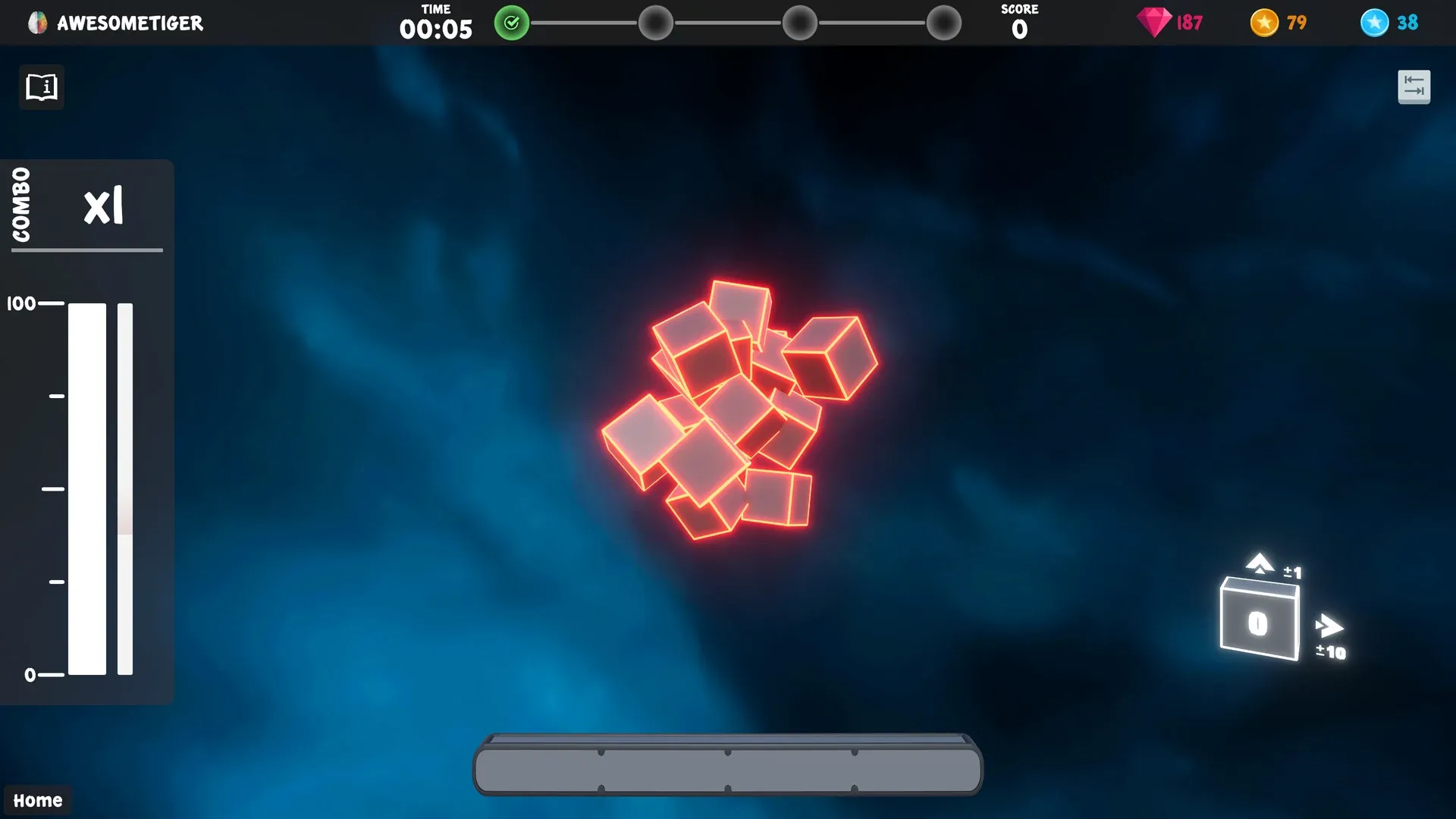
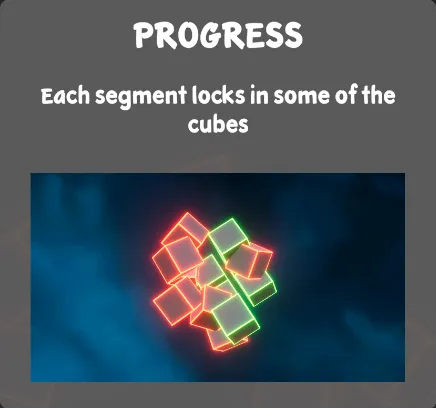
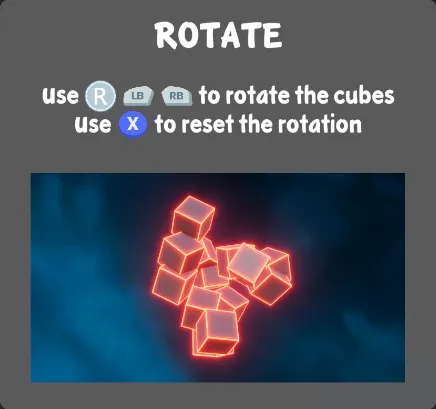
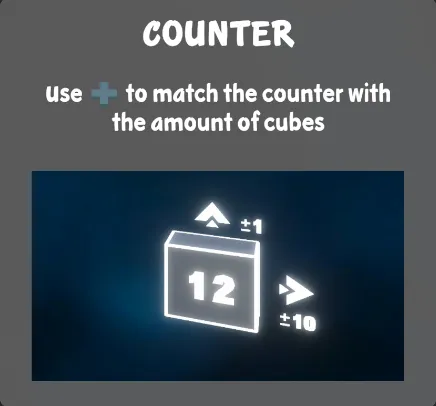
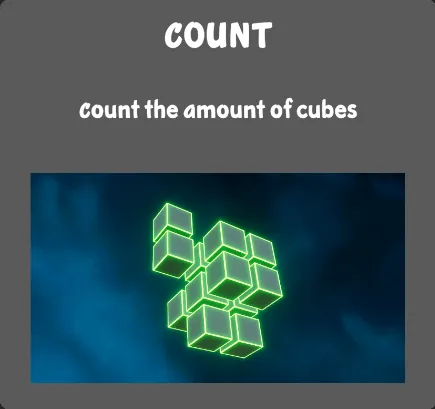
- Cube Count: with positive feedback, the block segments of a moving figure are stabilised so that all blocks can be counted quietly at the end. Trains selective attention, visual tracking and working memory.
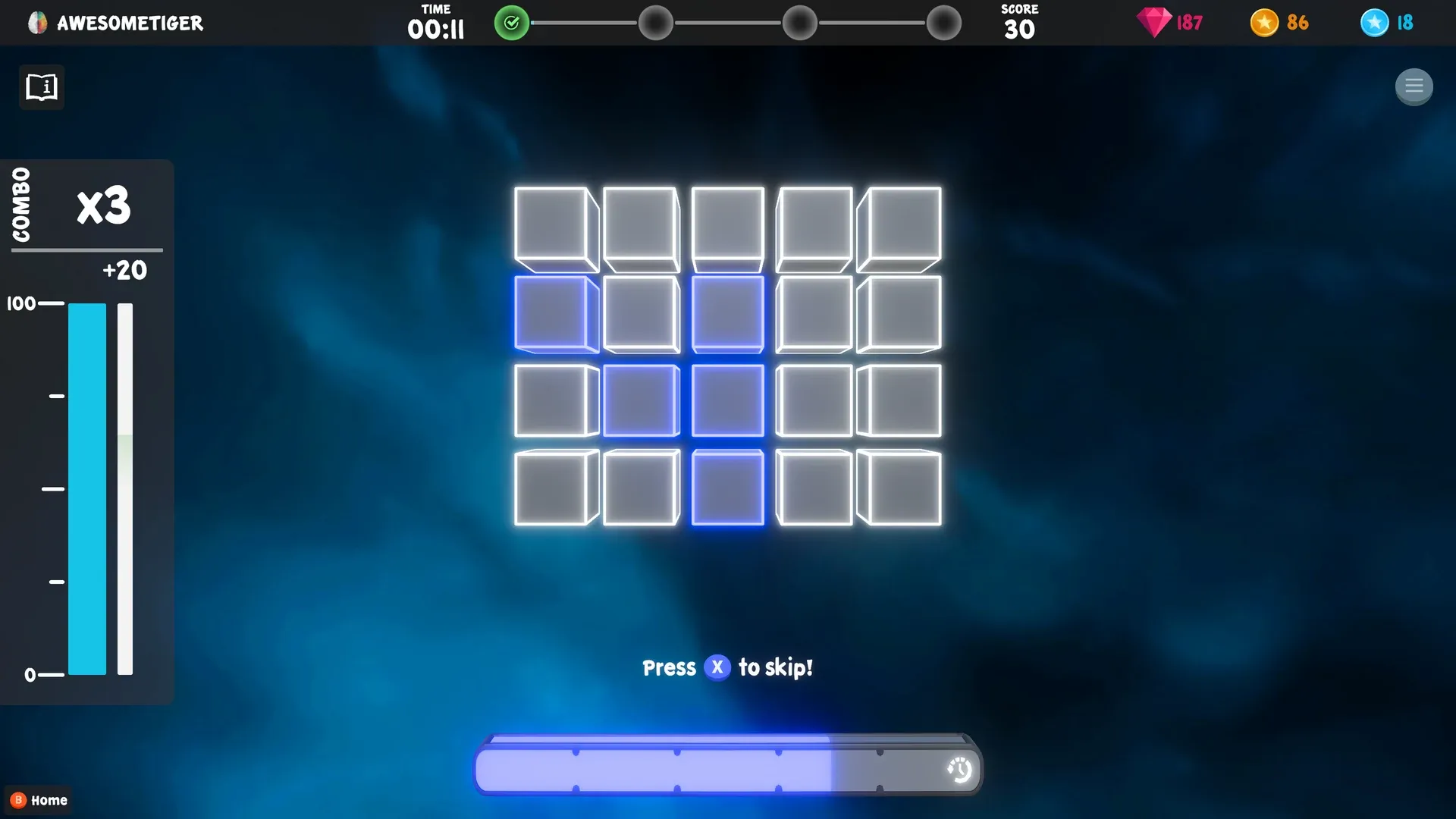
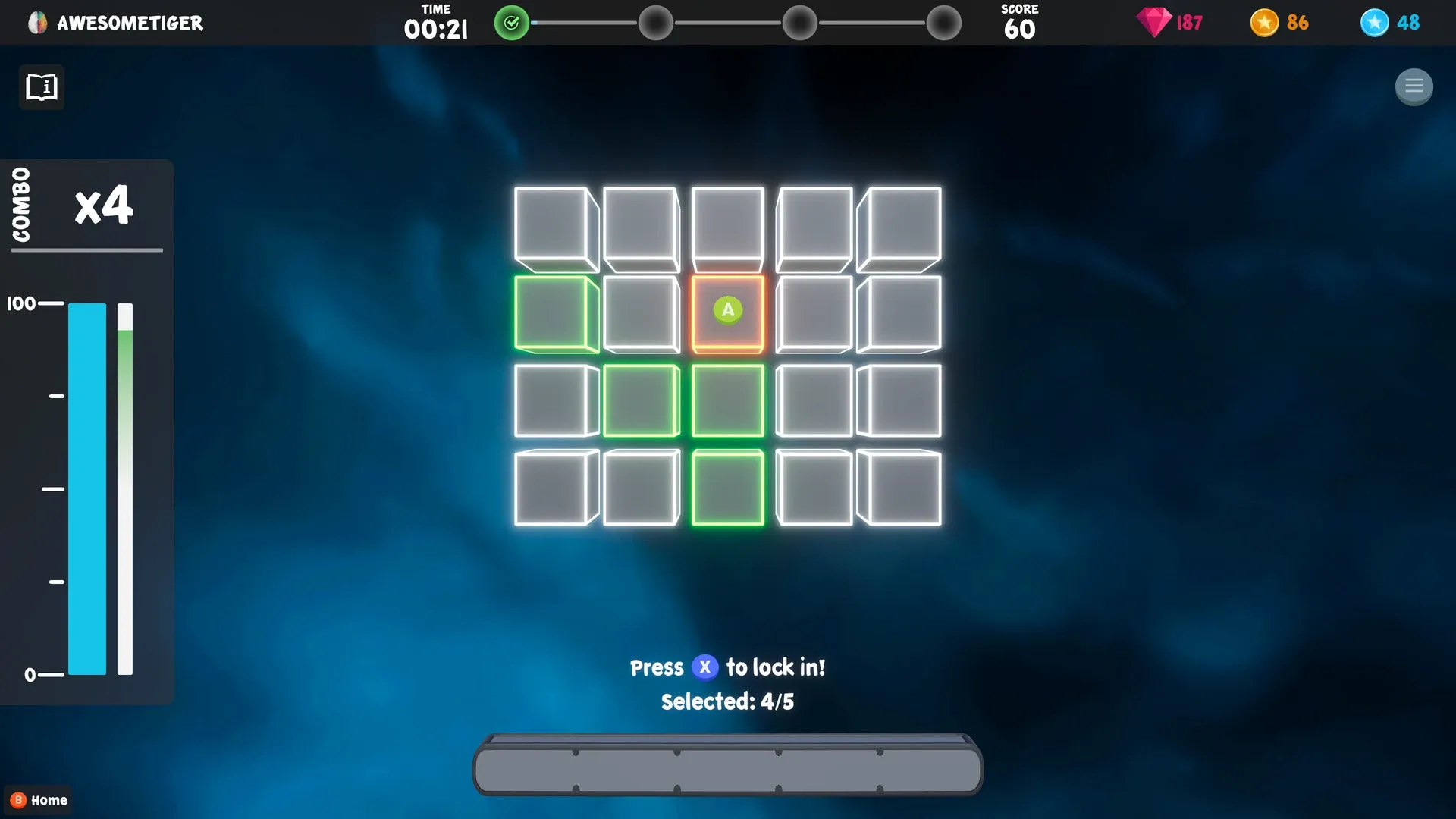
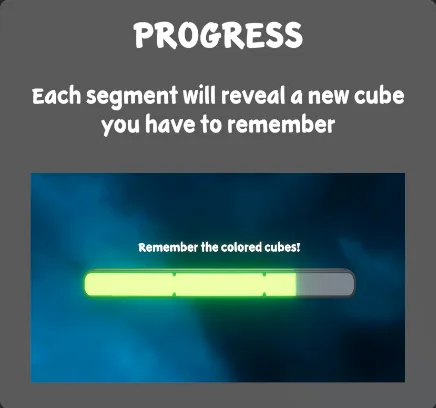
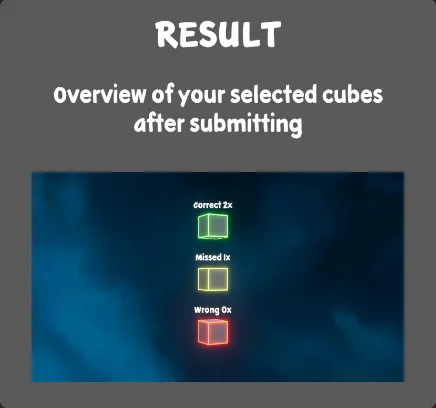
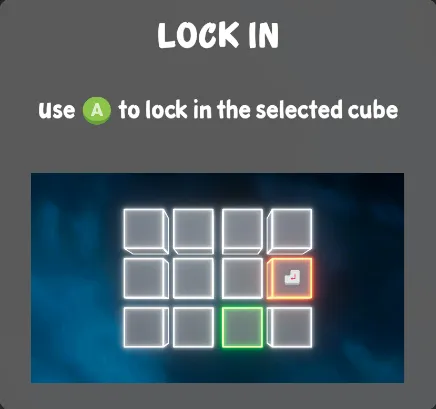
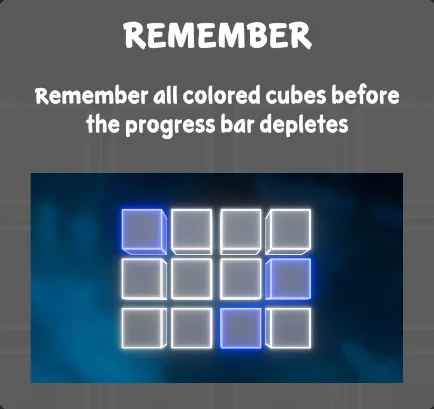
- Memory Challenge: observe and remember a growing sequence of coloured blocks, then navigate through the blocks and select those that were highlighted. Promotes short-term memory and pattern recognition.
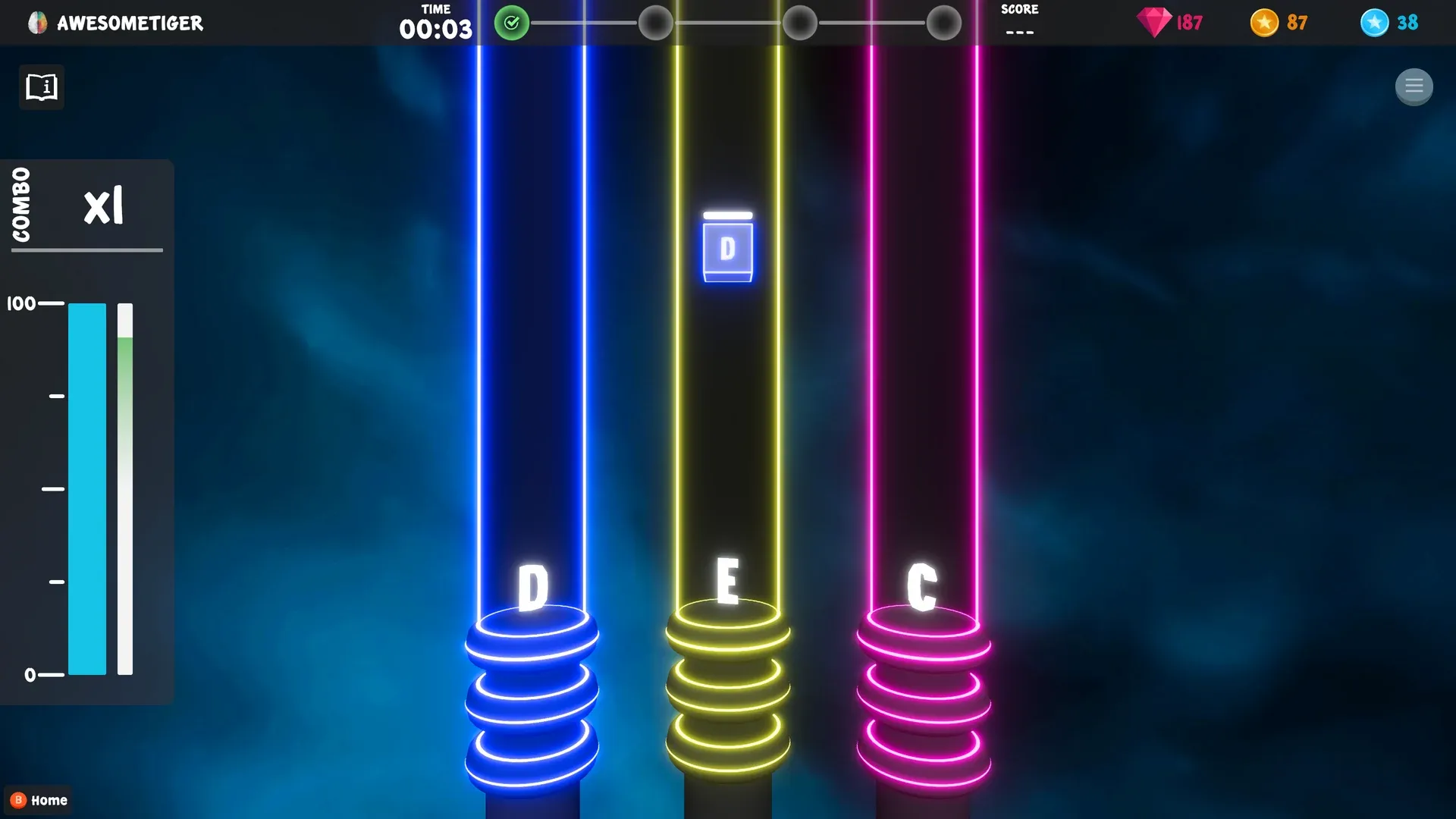
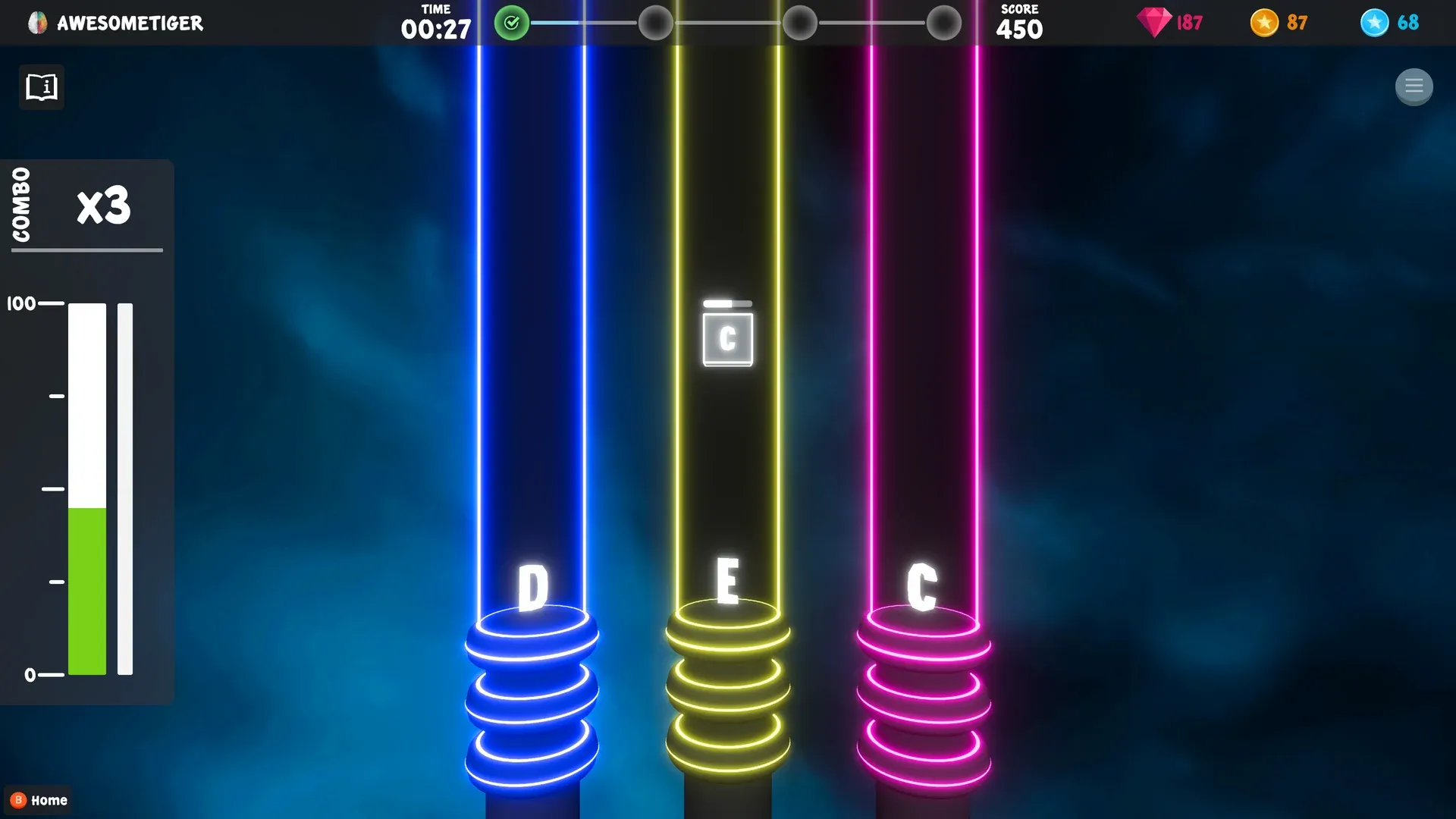
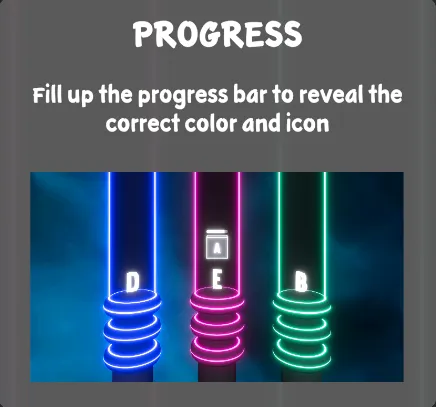
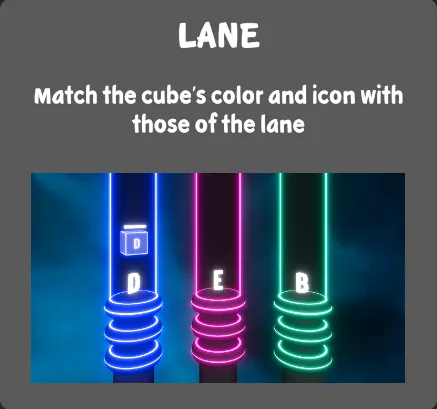
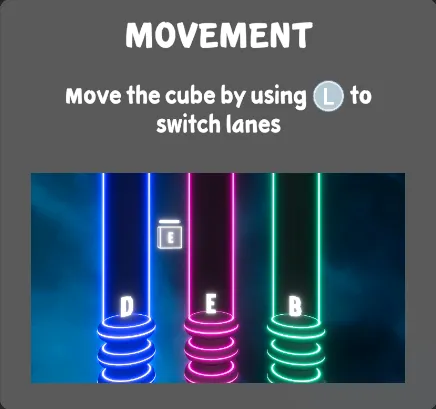
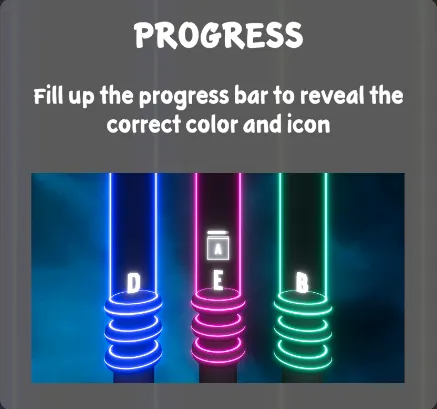
- Box Drop: when the positive feedback lasts long enough, the box shows the correct colour and symbol; then place it on the correct track. Strengthens sustained concentration and impulse control.
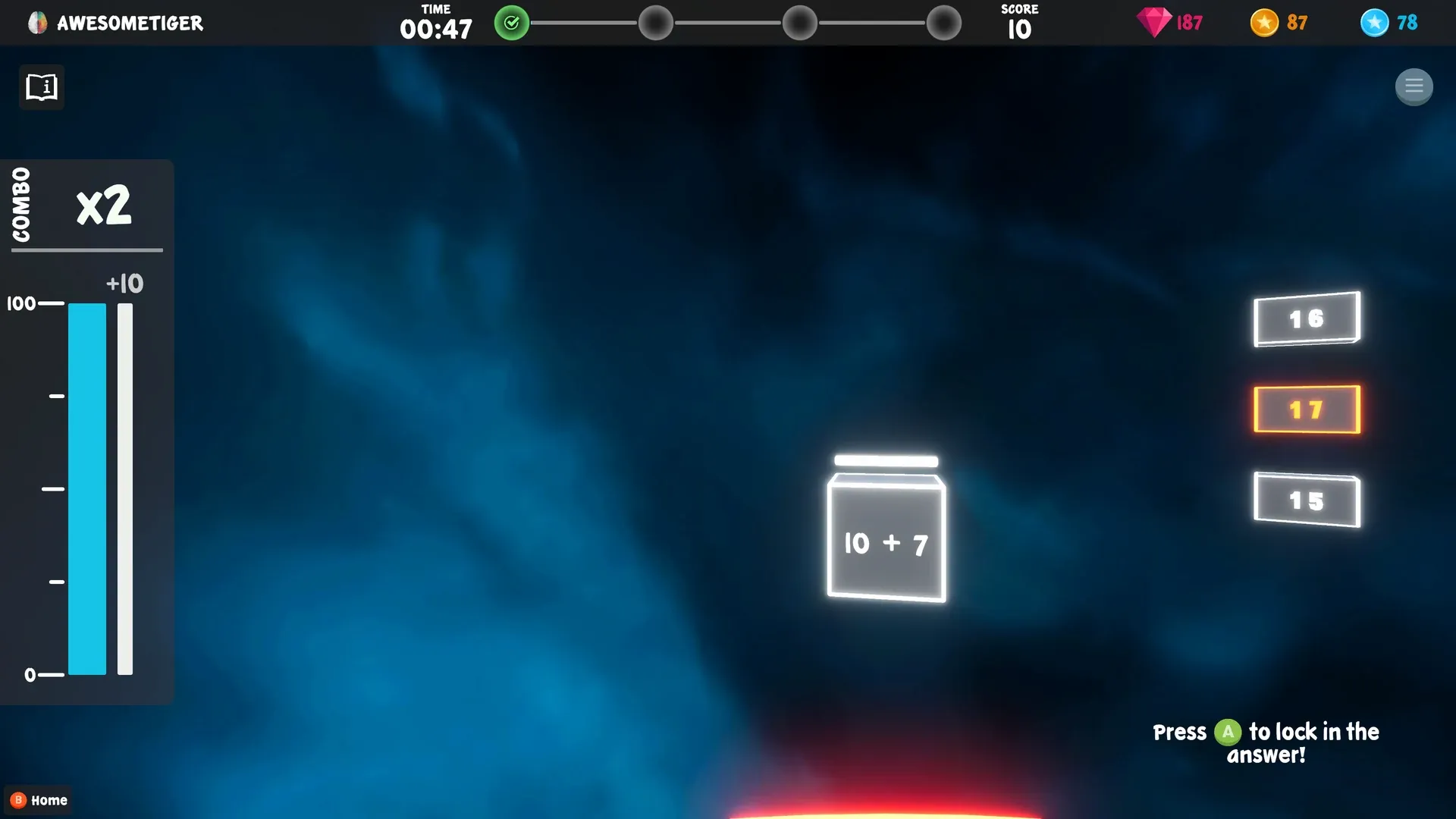
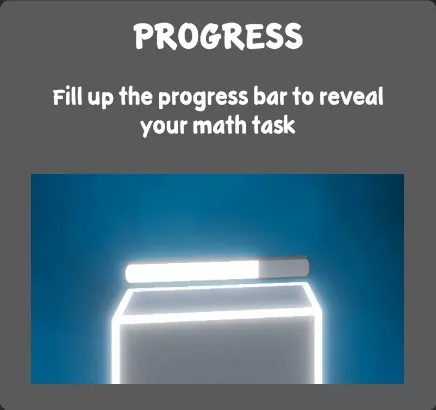
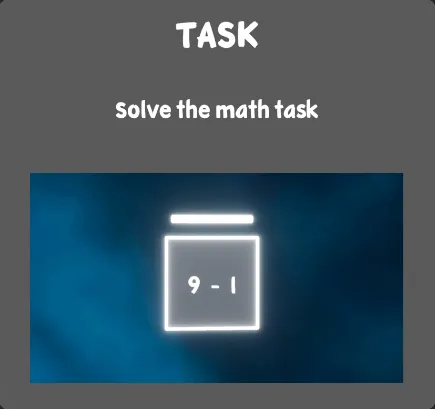
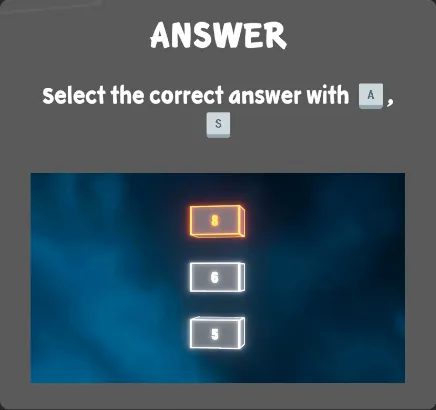
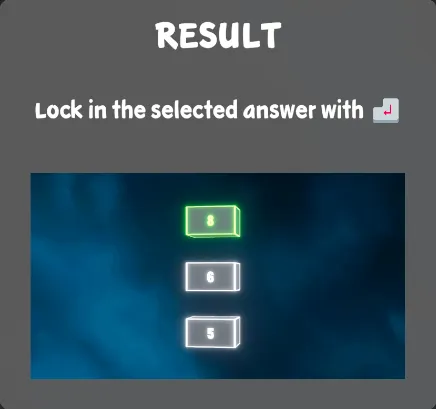
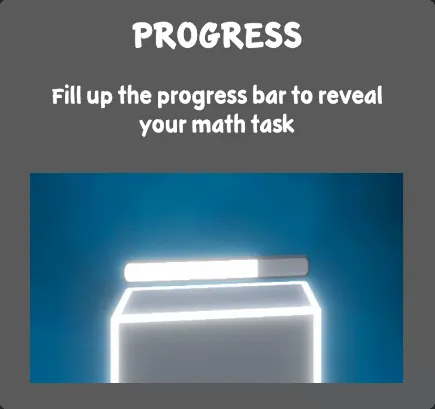
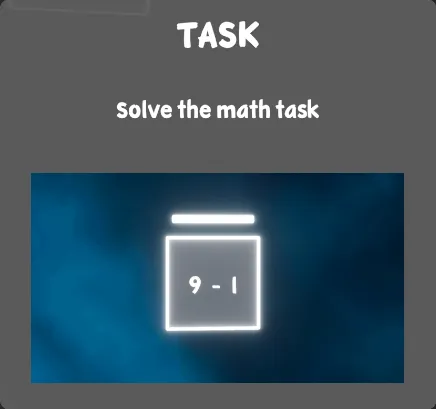
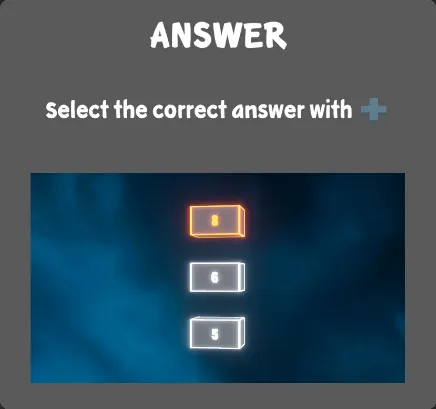
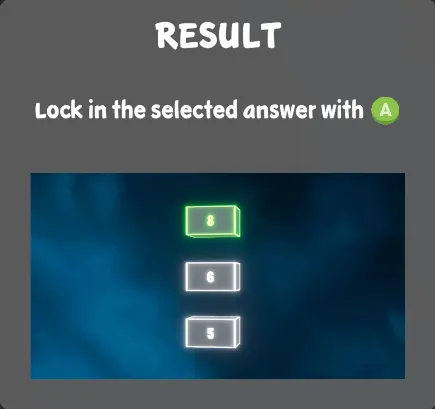
- Speed Math: when the desired training state is reached, the block slows down and shows a mental arithmetic task, which is then solved in a relaxed time frame. Promotes concentration and processing speed.
Feedback
Cube Count
| Positive feedback | Negative feedback |
|---|---|
| The progress bar fills up steadily | The progress bar starts to drain |
| Each time a segment fills up, it locks in a fixed number of cubes | It never drops below the last fully locked-in segment |
Memory Challenge
| Positive feedback | Negative feedback |
|---|---|
| The progress bar fills up steadily | The progress bar starts to drain |
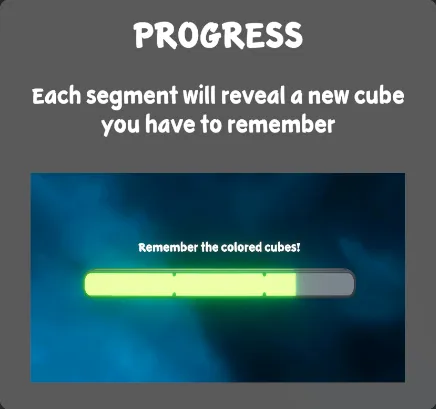
| Each filled segment reveals a cube that has to be remembered | When the progress bar drops, the revealed cubes disappear again |
Box Drop
| Positive feedback | Negative feedback |
|---|---|
| The cube’s progress bar fills up steadily | The cube’s progress bar starts to drain |
| When the bar is full, the cube’s colour and icon are revealed and the progress is locked | The cube falls more quickly |
| The cube falls more slowly | – |
Speed Math
| Positive feedback | Negative feedback |
|---|---|
| The cube’s progress bar fills up steadily | The cube’s progress bar starts to drain |
| When the bar is full, the maths task on the cube is revealed and the progress is locked | The cube begins to shake |
| The cube falls more slowly | The cube falls more quickly |
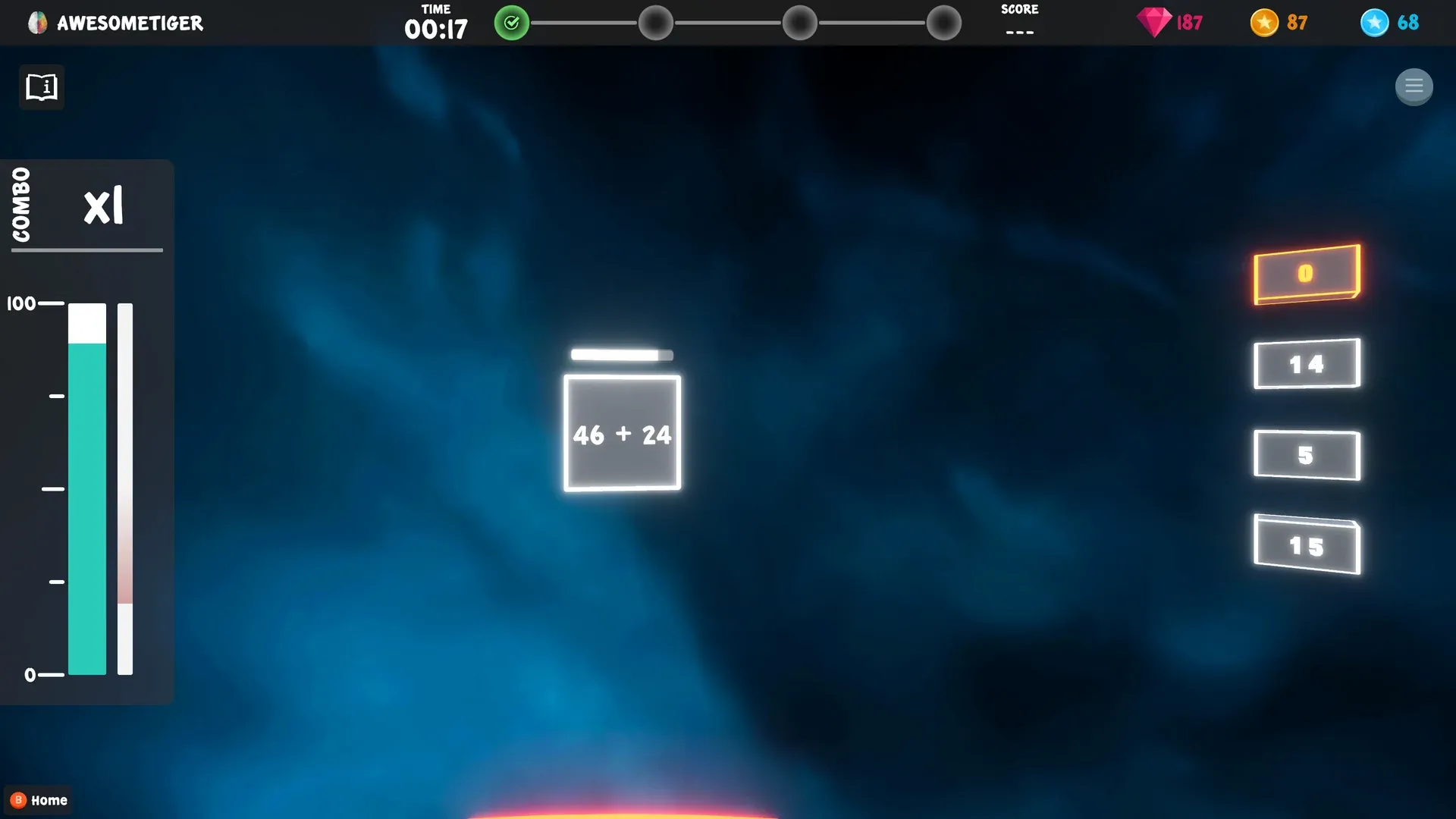
Brain bar and progress bar
The game uses the familiar bars of the Brain HUD.
Brain bar (immediate feedback)
- Shows the real-time neurofeedback success rate.
- Fills up whenever the EEG metrics are in the target range.
- Drains back towards empty whenever the success rate falls below that threshold.
Progress bar (indirect feedback)
- Charges or depletes based only on the brain bar’s fill state.
- Grows slowly while the brain bar stays above 50%.
- Shrinks while the brain bar is below 50%.
- Filling it to a given level unlocks rewards or certain areas and features of the game.
Controls
The game can be played with the keyboard or an Xbox controller (see Use an Xbox controller).
Cube Count
Keyboard:
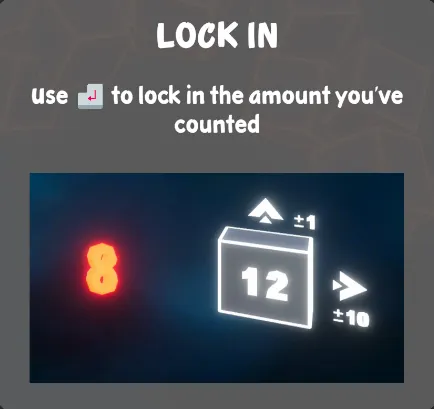
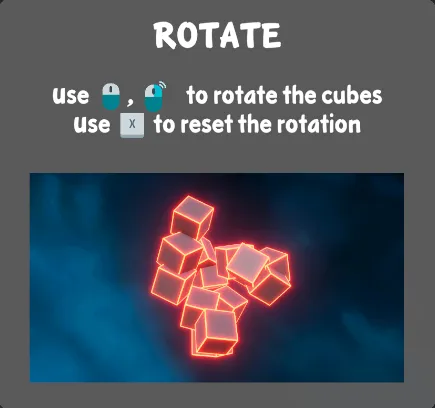
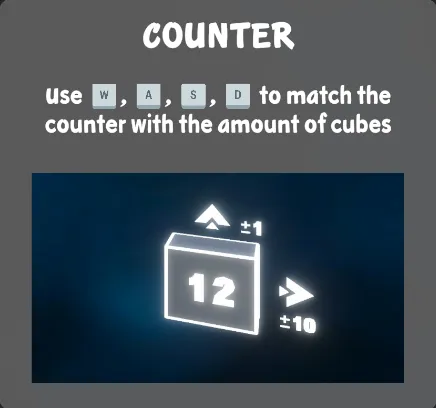
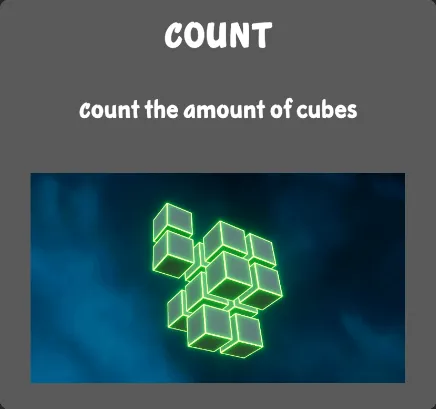
Controller:
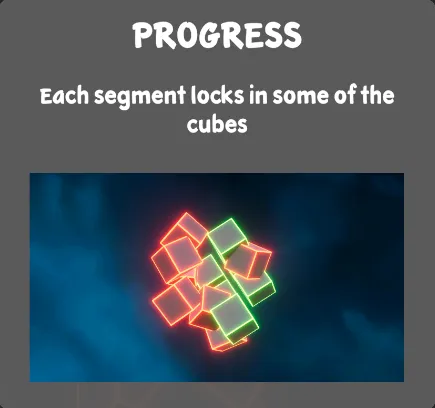
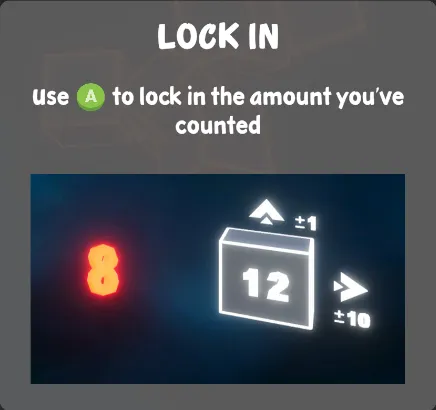
Memory Challenge
Keyboard:
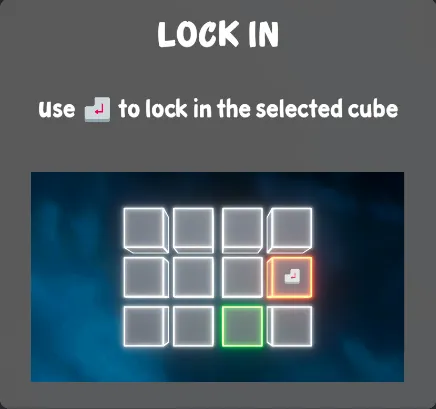
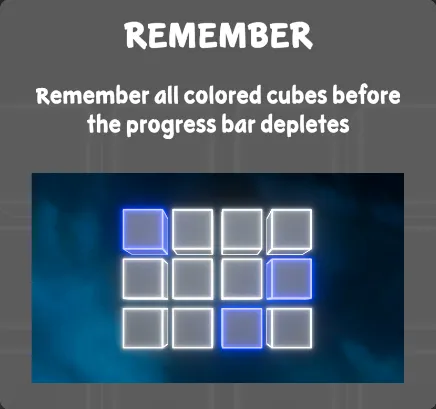
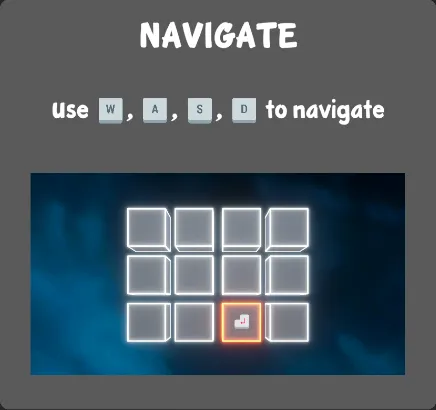
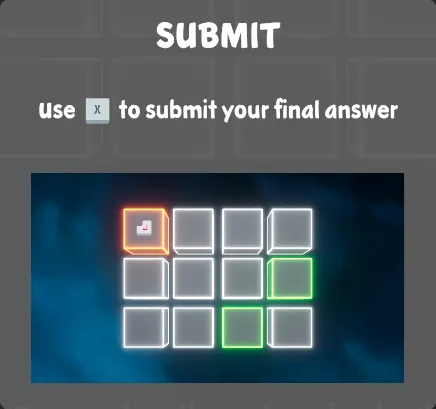
Controller:
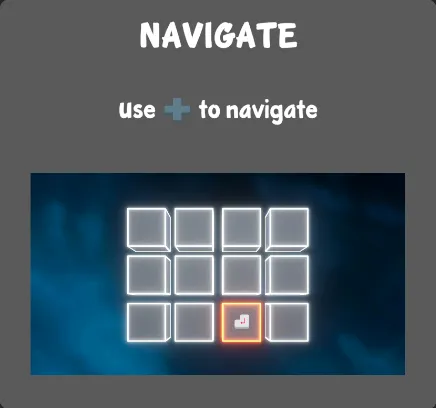
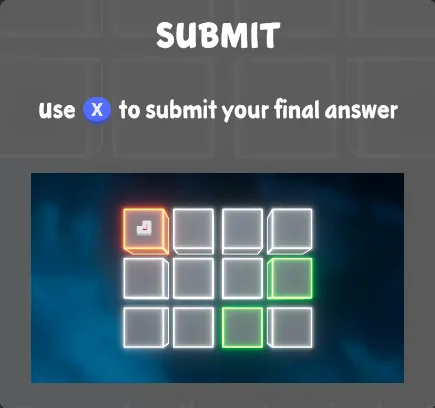
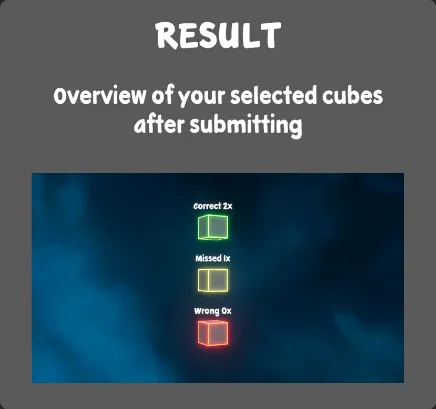
Box Drop
Keyboard:
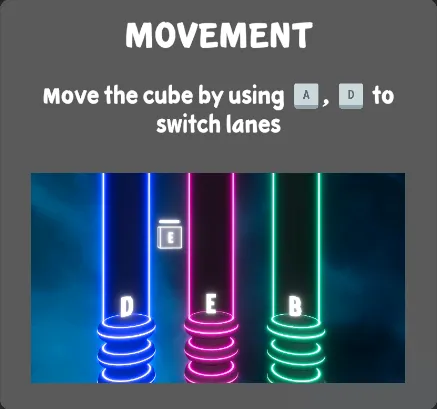
Controller:
Speed Math
Keyboard:
Controller:
Who this game is suited for
- Clients of all ages
- Beginners looking for an introduction to neurofeedback training
- Experienced users who want to deepen their skills on higher difficulty levels
- Anyone with 10 minutes to spare (the session length is fully adaptable)
- Players who want an adjustable challenge: each mini-game offers several difficulty levels
Design philosophy and neurofeedback aspects
Train Your Brain V2 is particularly suitable for training concentration and sensorimotor processing, and it also helps with impulse control and stress management. Neurofeedback gives the user direct feedback on their brain activity and teaches them to control it consciously with the help of positive feedback. Negative feedback shows as a slow decline of the progress achieved so far and reminds the trainee to return to the desired state. The clearly defined goal and the time component add a challenge the trainee has to overcome to reach the desired state, for example keeping concentration while the time pressure rises. When the task is completed, the trainee is rewarded with positive feedback.