Story
In a quiet and relaxed environment the player puts together a self-selected picture or motif, piece by piece, like a puzzle.
Feedback
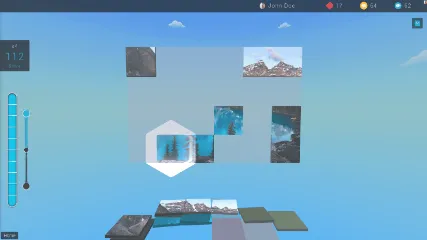
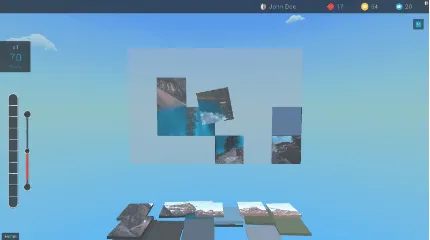
| Positive feedback | Negative feedback |
|---|---|
| The puzzle piece moves to the right place | The puzzle piece does not move to the right place and stays in the middle |
Feedback process
The feedback is shown through the progress of the game, which is linked to the brain bar and the progress bar (see Brain HUD).
If the selected factors are in the desired range, the brain bar fills up directly and without delay. If they are not, the brain bar drops until it is empty. When the brain bar is completely full, the player is rewarded with a maximum event.
The progress bar is linked to the brain bar. If the brain bar stays in the positive range for a selected period of time, the progress bar builds up. When the progress bar is full, the player is rewarded with a special event. Similarly, if the brain bar stays in the negative range for a longer time, the progress bar fills up in the negative range until a special event informs the player.
| Positive special event | Negative special event |
|---|---|
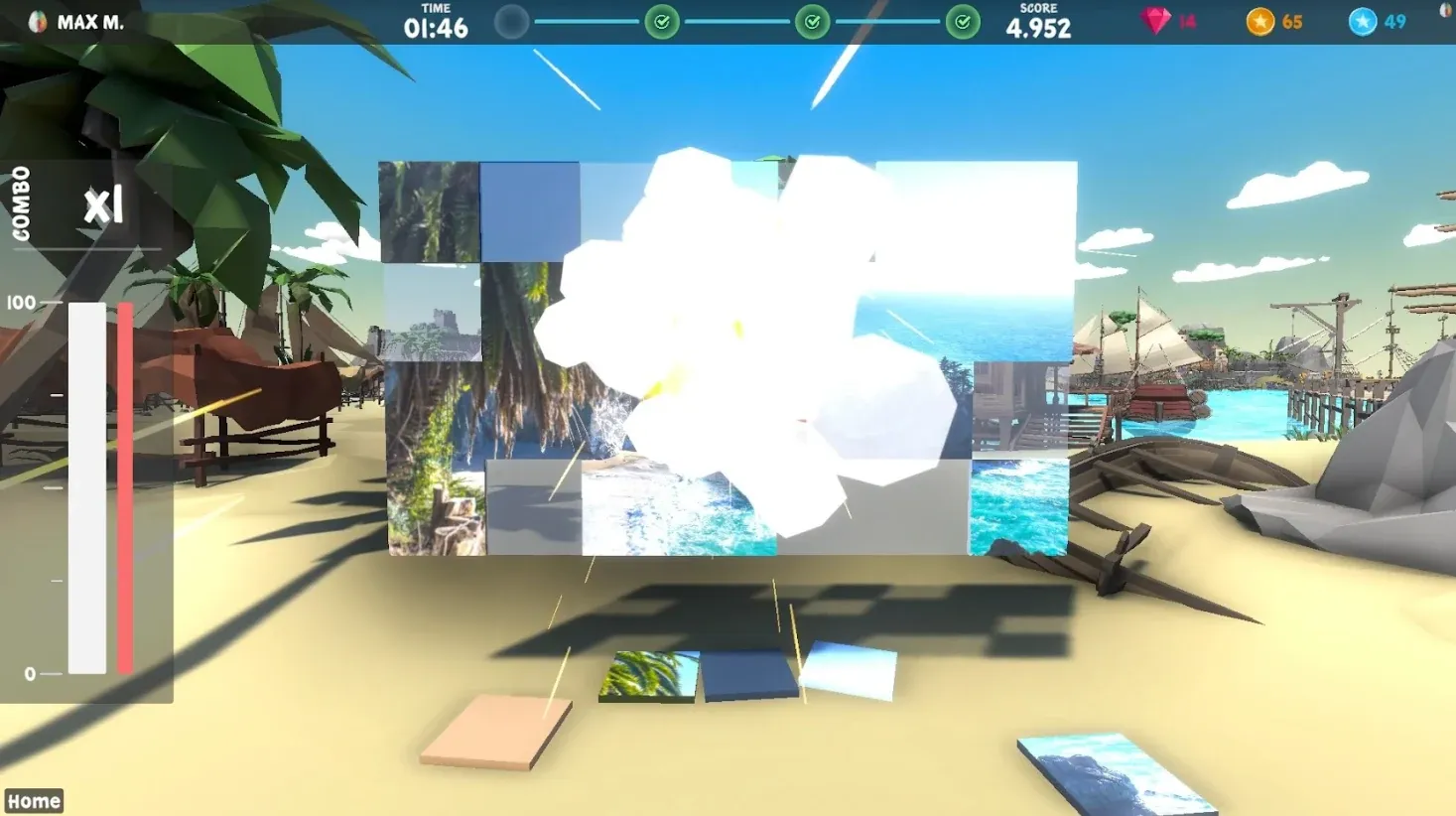
| The puzzle piece is put in the right place | The puzzle piece does not move and a small explosion occurs |
Application, combination and typical reactions
This game is suitable for clients of all ages. It works as an introduction to the training and as a second building block for winding down. The optimal duration is between 5 and 10 minutes, but it can be adapted as needed. Reaching a certain score or development level sets a clearly defined end.
Puzzle combines well with listening to music, as the game itself is kept clear and does not offer too many stimuli. However, music can impair concentration and make the game more difficult.
| When in training | Combination with different feedback |
|---|---|
| Start or first half | Music (possible but not necessary) |
Gameplay, shop and upgrades
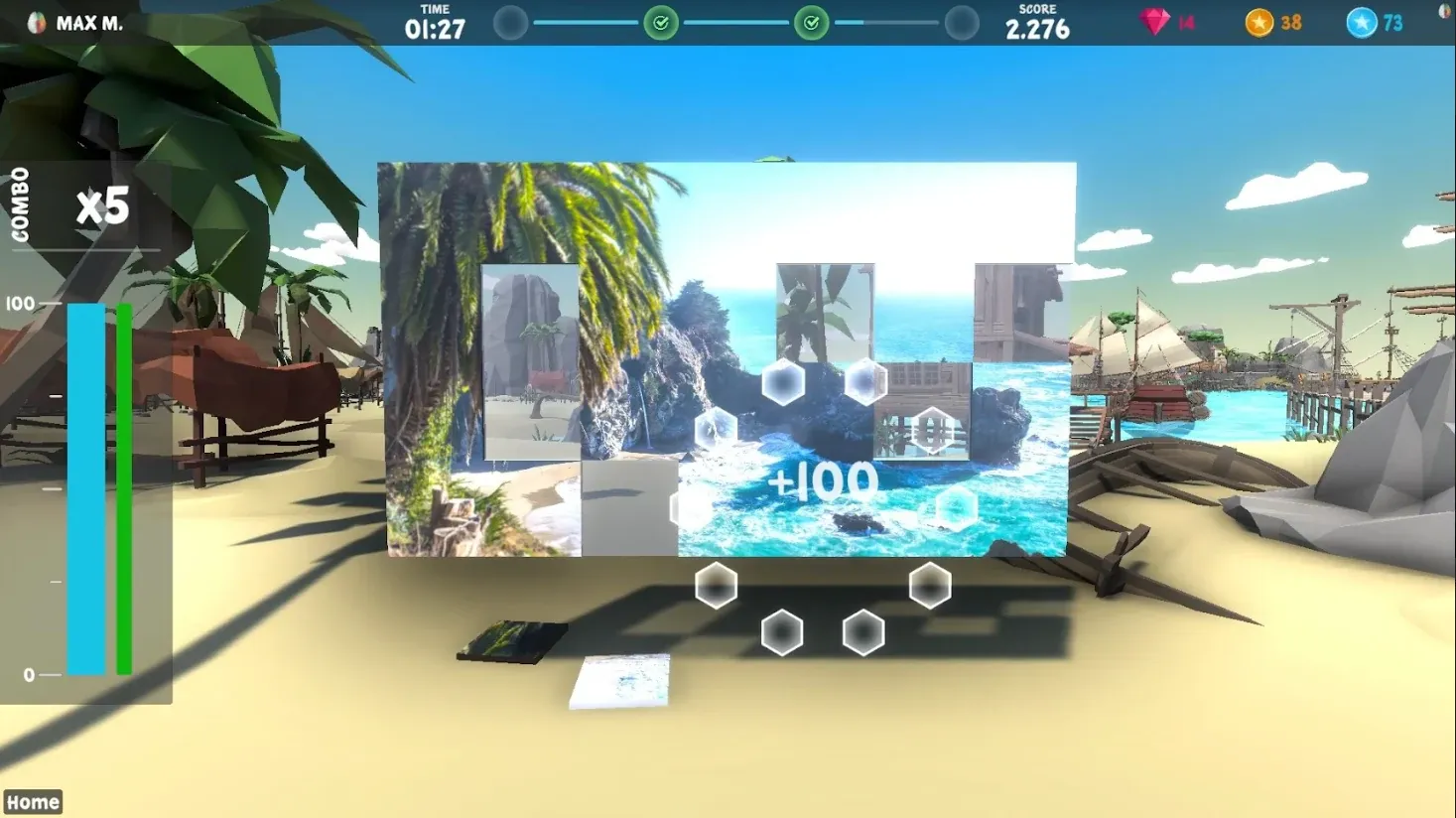
As the puzzle pieces are placed in the correct position, the picture or motif is completed. During the game the player collects coins whenever the feedback is positive. The coins unlock new themes (backgrounds).

Coin currency: 100 blue coins = 1 gold coin, 100 gold coins = 1 ruby. See Neuro Player System.
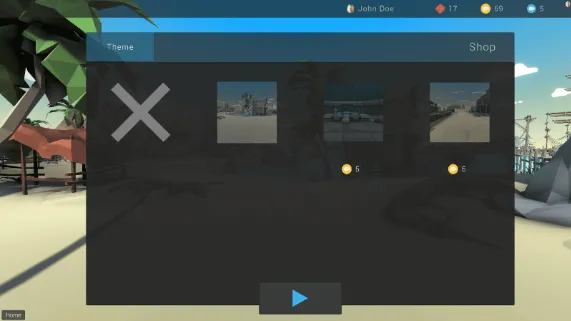
Shop – themes: the collected coins can be spent on new backgrounds or themes.
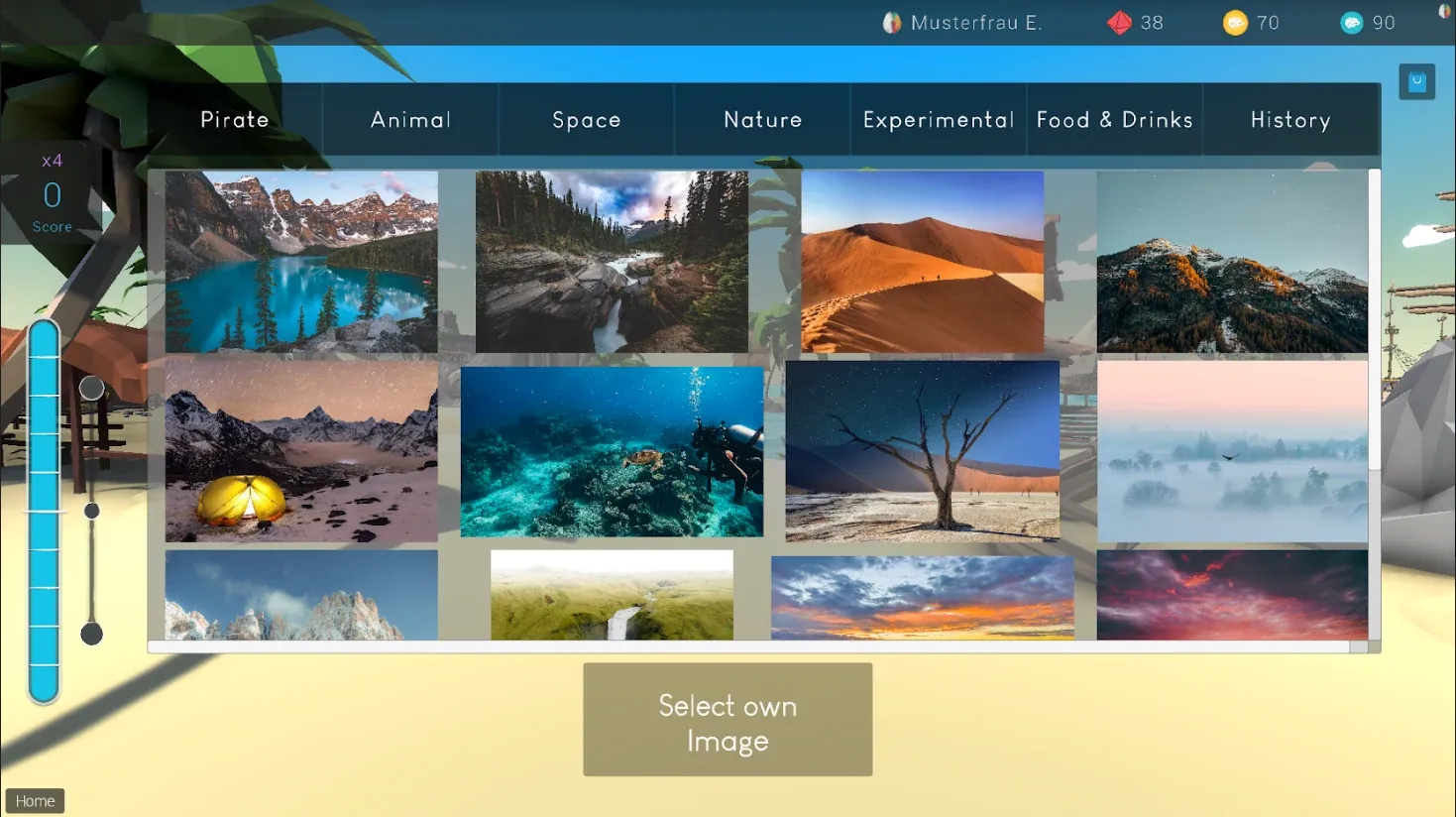
Shop – image selection: the shop offers images for the themes Pirate, Animal, Space, Nature, History, Experimental and Food & Drinks. You can also use your own images.
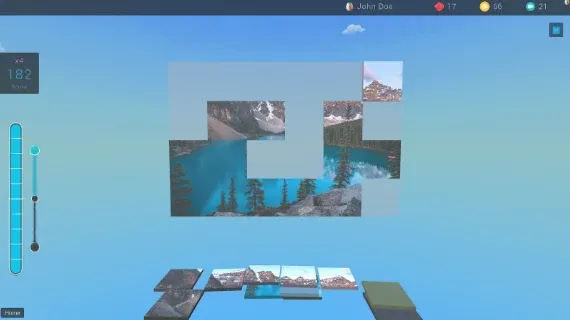
Progress bar: the progress is shown in two ways. The image fills with more and more pieces until it is complete, and the unused pieces on the floor become fewer and fewer.
Philosophy and background
By consciously reducing external stimuli, Puzzle is well suited for training calm focus. The client learns to stay focused and maintain attention even when not much is happening or when thoughts tend to wander off. The defined goal of finishing the puzzle helps to uphold the calm focus until the task is done.