Story
As the pilot of a space shuttle, the player travels through space, watches out for meteorites and protects the world from enemy spaceships.
Controls
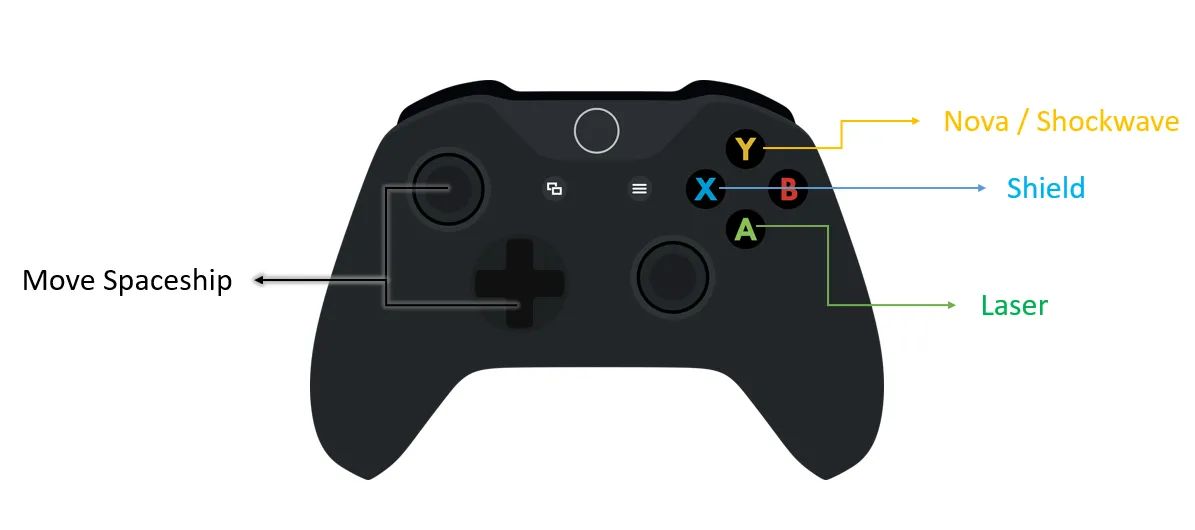
Always play this game with the original Microsoft Xbox controller (see Use an Xbox controller).
Gameplay and waves
During the game the player advances through more and more levels, called waves, until all lives are lost and the game is over. The higher the wave, the higher the difficulty.
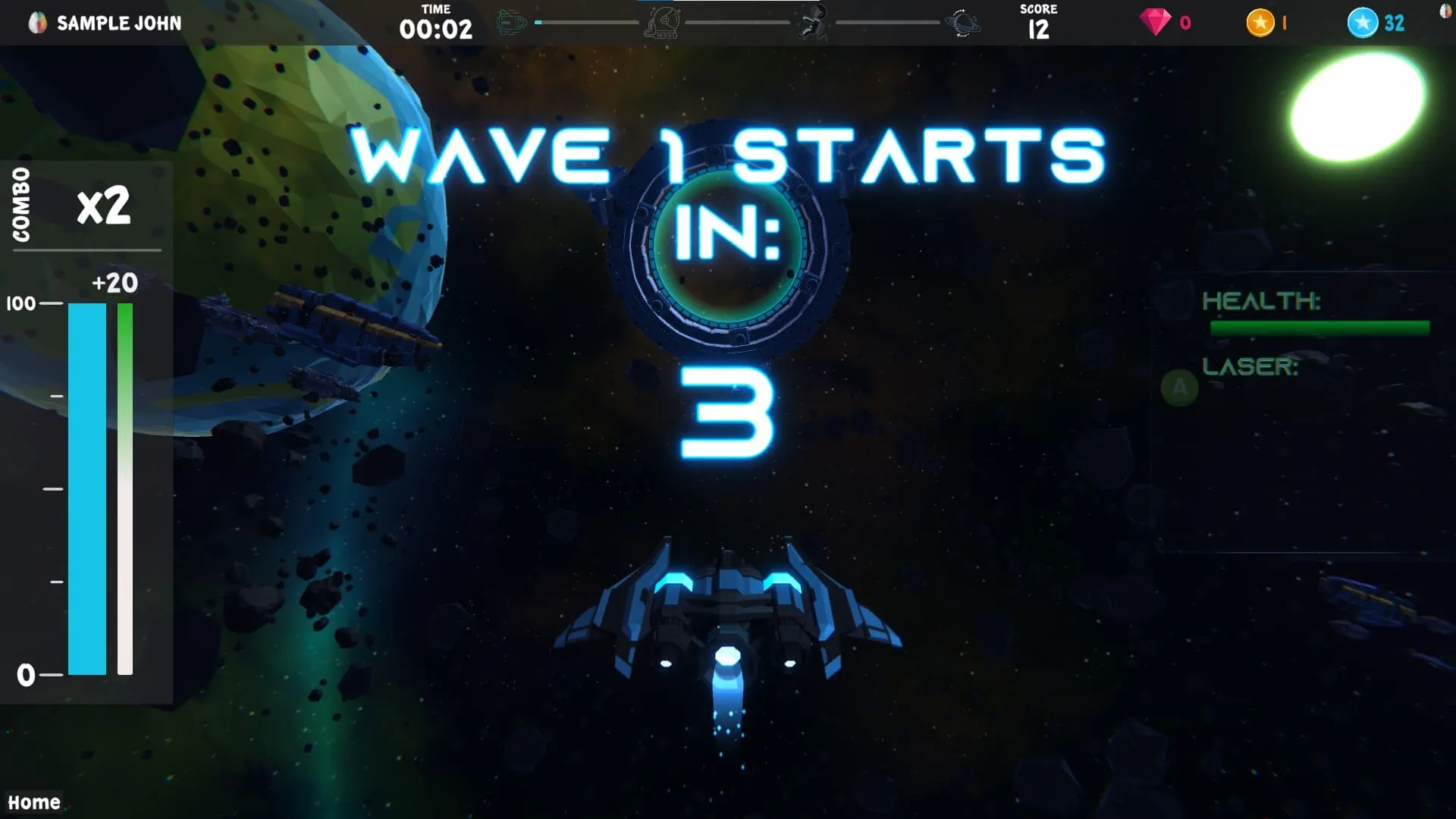
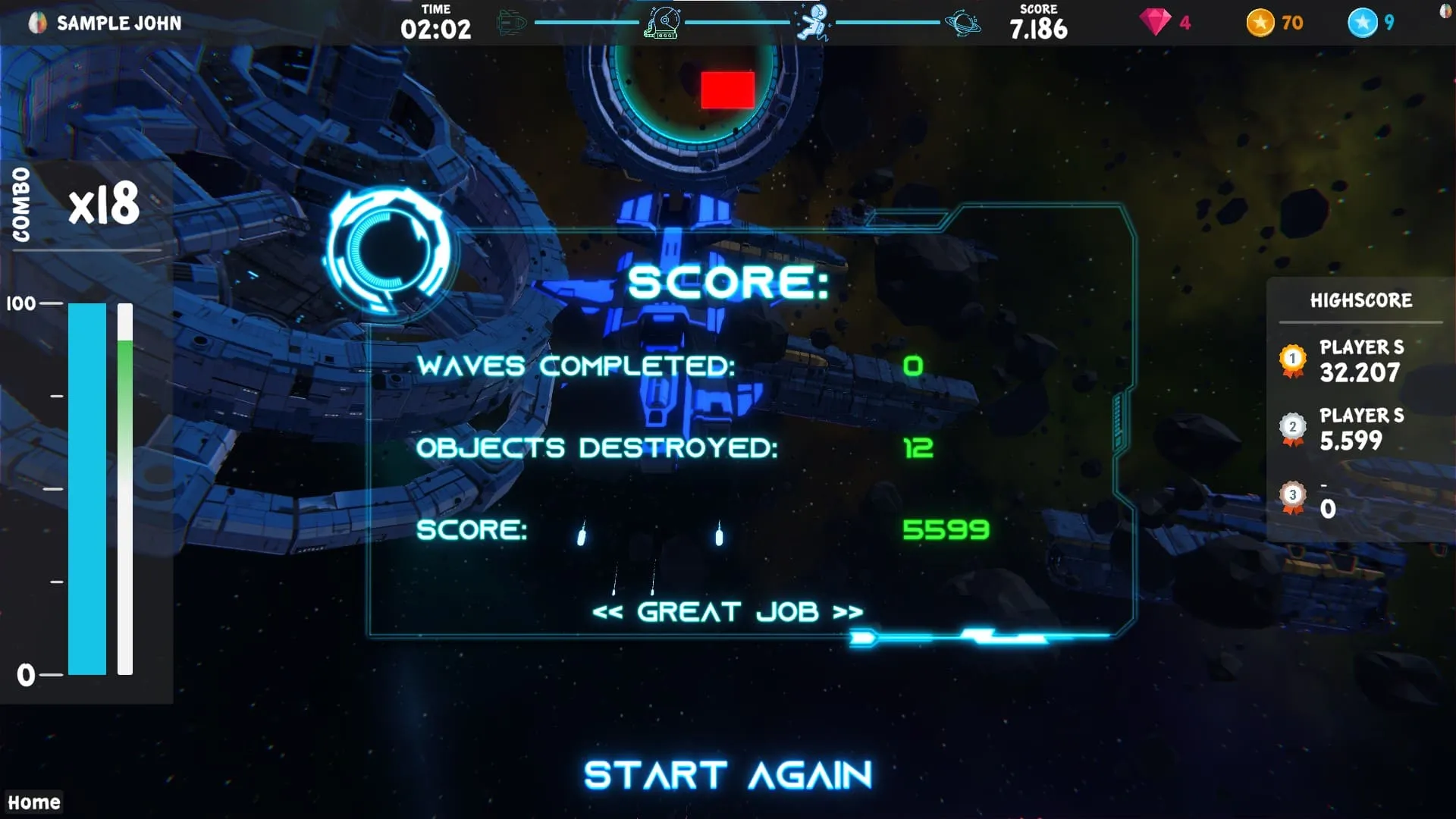
With each wave the enemies become faster and have more lives. The number of lives and the speed of the enemies can also be set manually in BrainAssistant.
Feedback
| Positive feedback | Negative feedback |
|---|---|
| The space shuttle shoots at a high frequency | The space shuttle shoots at a low frequency |
| The space shuttle generates a laser beam to defend itself | The space shuttle does not generate a laser beam and cannot protect itself |
| All enemies and obstacles can be overcome with the laser | The shuttle cannot move and a visual and acoustic signal plays |
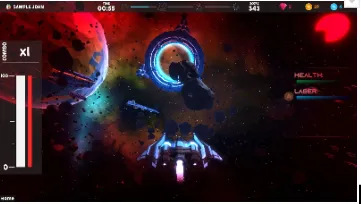
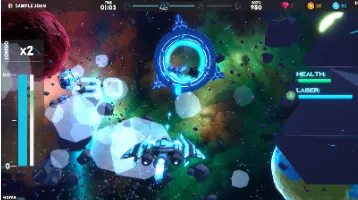
Feedback process
The feedback is shown through the progress of the game, which is linked to the brain bar and the progress bar (see Brain HUD).
Brain bar: if the selected factors are in the desired range, the brain bar fills up directly and without delay. If they are not, the brain bar drops until it is empty.
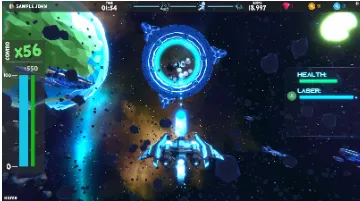
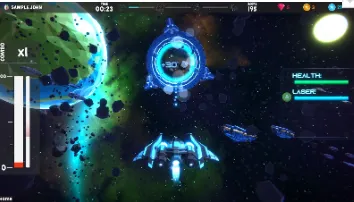
The progress bar, right next to the brain bar, is linked to it. If the brain bar stays in the positive range for a selected period of time, the progress bar builds up. When the progress bar is full, the player is rewarded with a special event. Similarly, if the brain bar stays in the negative range for a longer time, the progress bar fills up in the negative range until a special event informs the player.
Milestone bar: positive feedback and destroying meteorites or enemy spaceships fill the milestone bar.

Application, combination and typical reactions
This game is particularly well suited for children from the age of 8. In the training it can serve as an incentive or reward after a calmer game, as an exciting introduction or as an intermediate component.
The optimal duration is around 10 to 15 minutes. Thanks to the variety of the levels and the steadily increasing challenge, the game does not get boring. Compared to quieter games, Space Adventure exposes the player to many stimuli and distractions, which helps to practise focusing on a goal. The increasing difficulty is a challenge especially for clients with low frustration tolerance or increased impulsivity.
Handling the controller is an additional difficulty for some clients, since cognitive and motor skills have to work together. This also brings benefits: people who struggle with motor restlessness often find it easier to calm down when their hands are busy. Clients who have difficulty using the controller may produce more muscle artifacts.
| When in training | Combination with different feedback |
|---|---|
| Start or first half | Music (possible but not necessary) |
Shop
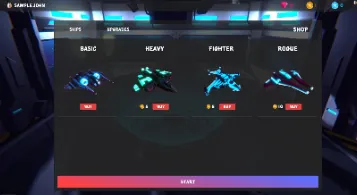
As the player reaches new waves, coins are collected that buy new space shuttles or upgrades and change the game character.

Coin currency: 100 blue coins = 1 gold coin, 100 gold coins = 1 ruby. See Neuro Player System.
Shop – shuttles: different shuttles can be bought with the collected coins.
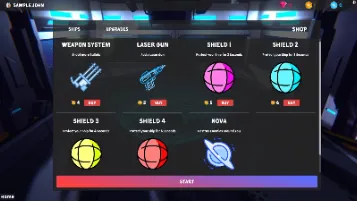
Shop – upgrades: various upgrades, such as protective shields, can be bought.
Upgrades
-
Weapon system: the shuttle fires bullets at a higher frequency.
-
Laser gun: the shuttle can additionally fire a laser shot at regular intervals.
-
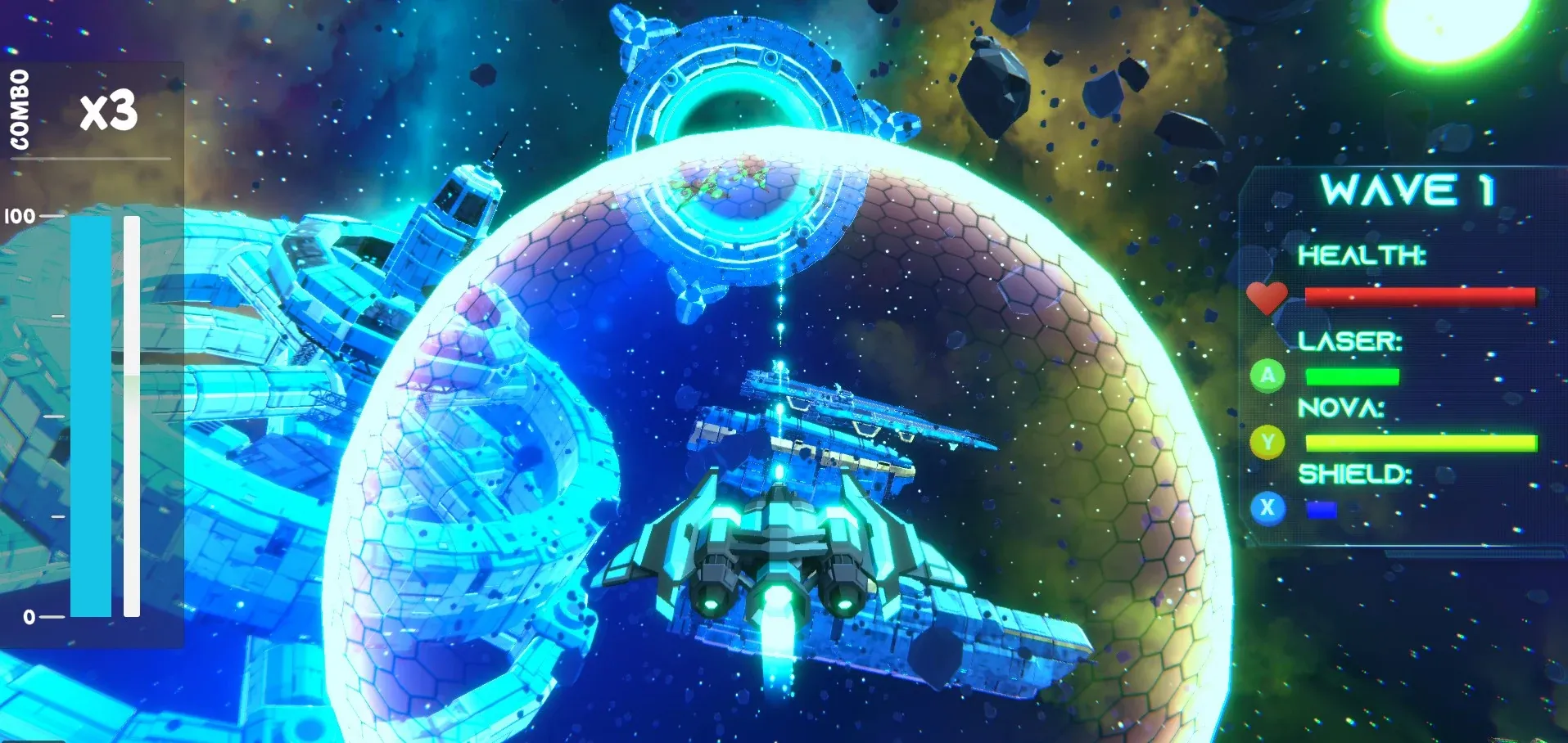
Shield: the shuttle takes no damage, even when it collides with enemies or objects or is hit by enemy shots. The shield can only be activated when its bar is fully charged.
-
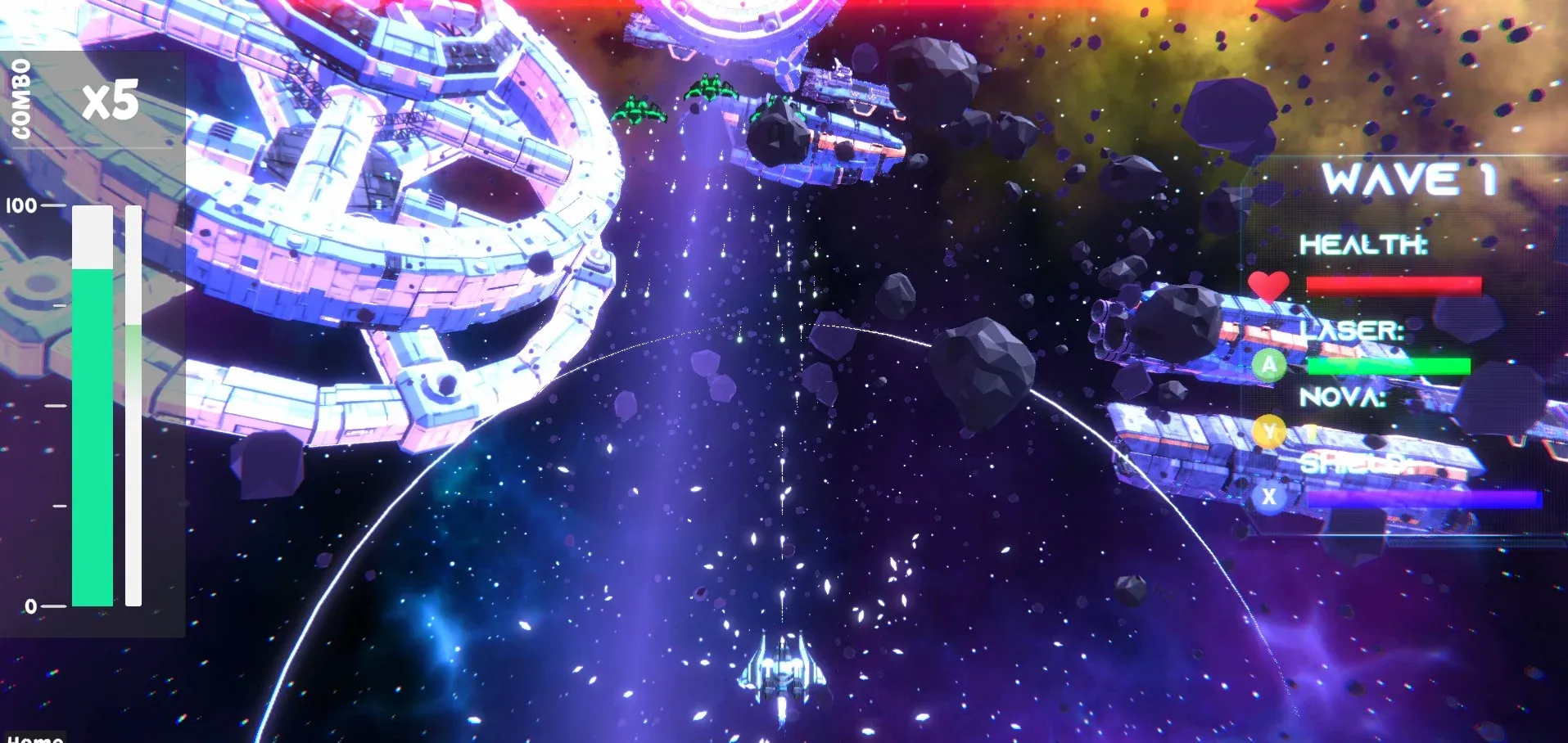
Nova: when Nova is activated, all enemies around the shuttle are destroyed and bosses are damaged. Nova can only be activated when its bar is fully charged.
Philosophy and background
In Space Adventure the player learns to keep calm even with many external stimuli. The changing environment and the handling of obstacles and setbacks act as distractions.